Related articles
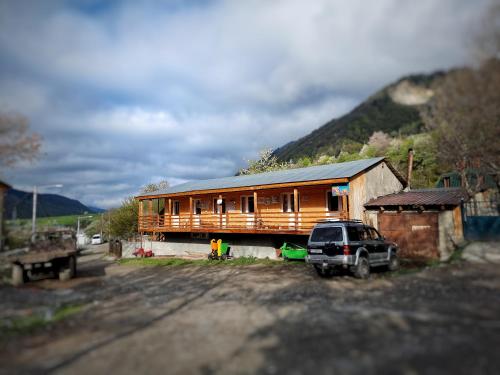
Mestia and the Svaneti road: open, green and quiet
The Zugdidi–Mestia road (about 130 km, three hours in good conditions) is fully open in May and is the practical highland base for the month. Snow has pulled back above Mestia town at 1,500 m, though the last few kilometres before the resort can still be slushy after a cold night. Marshrutkas from Zugdidi run reliably; a private car costs roughly what you would pay for a day tour, and the drive up the Enguri valley past Jvari and Khaishi is the point of the trip.
Around Mestia the wildflower window peaks in the second half of May: marsh marigolds and primulas in the wet meadows near the Hatsvali cable car base, rhododendrons along the trails toward Zhabeshi on the Mestia–Ushguli route. The Ushguli road itself (roughly 40 km, two hours) is usually passable by 4x4 from mid-May but not in a standard saloon. Book a room in Mestia rather than Ushguli for the first half of the month — the guesthouses in Ushguli open later and the nights are still near freezing.
Tusheti and Kazbegi: what is actually passable
The Abano Pass to Tusheti (Omalo, around 2,900 m at the pass) opens late — typically late May in a mild year, June in most. Do not plan a May Tusheti crossing. Instead take the Georgian Military Highway north to Kazbegi (Stepantsminda), about 150 km and 2.5–3 hours from Tbilisi. The road is open year-round and the Dariali gorge is at its best now: green, fast water, and the Gergeti Trinity Church path clear of snow up to around 2,200 m.
In Kazbegi, meadows around Juta and the Sno valley carry some of the earliest high-altitude flowers: gentians, saxifrages and the first rhododendrons on south-facing slopes from mid-May. Base yourself in Stepantsminda rather than Gudauri — the ski resort is a building site in May. Rooms in Stepantsminda guesthouses are plentiful and cheaper than Mestia, and the village is small enough to walk. I would book two nights there and one in Tbilisi for the drive, not the other way round.
Wildflowers worth planning around
May's star species in the Georgian Caucasus are the Caucasian rhododendron (Rhododendron caucasicum), which carpets slopes between 1,800 and 2,600 m from about 20 May, and the Caucasian peony, which flowers lower down in the foothills around Bakuriani and the Trialeti range. Around Svaneti, look for the Svanetian bellflower on rocky ground near Ushguli. In the Lagodekhi reserve on the Kakheti side, lower and warmer, the forest floor is already in flower by early May.
Timing matters more than location. A cold spring pushes everything back ten days; a warm April brings the rhododendrons out around Mestia by 10 May. Ask your guesthouse owner what is out before you commit to a long hike — they will know the local slope better than any guidebook. Bring layers: a sunny 18°C afternoon in Mestia drops to 4–6°C at night in May, and rain is common. Waterproof boots are essential; the trails are muddy well into June.
Practical May planning and where to stay
May is shoulder season, so availability is good but not everything is open. In Mestia, Hatsvali, and Stepantsminda a fair number of guesthouses reopen around 1 May; in Ushguli, Omalo and Shatili many stay shut until late May or June. Check before you book. Internal flights from Tbilisi to Mestia (Queen Tamar Airport) are weather-dependent and often cancelled in May — do not build an itinerary around them. Trains to Zugdidi and Kutaisi are reliable and cheap.
For a week, I would do: two nights Tbilisi, three in Mestia (with a day trip toward Ushguli if the road is dry), two in Stepantsminda, and a final night back in Tbilisi. Book the Mestia and Kazbegi rooms now — the 15,153 visitors browsing this site in the last week are mostly looking at the same shoulder-season weeks. Skip Batumi in May; the sea is still cold and the season has not started. The highlands are the better bet, and Mestia is the safest base while the passes finish opening.