Related articles
Where to stay
Hotels in Lagodekhi

Getting to Lagodekhi and Choosing Your Base
Lagodekhi town sits in Georgia's far north-east, in Kakheti, roughly 160 km from Tbilisi. Marshrutkas to Lagodekhi leave from the Samgori side of the capital and take around three hours; driving yourself via the Gombori pass or the Alazani valley takes about the same. The reserve entrance and visitor centre are a short walk from the centre of town, which is why most hikers sleep in Lagodekhi itself the night before starting rather than pushing on from Telavi or Sighnaghi, both of which are an hour or more away by road.
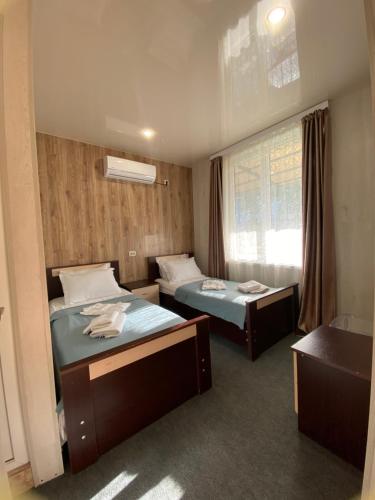
Book two nights in Lagodekhi, not one: the night before you walk and the night you come down. Guesthouses in town are the practical choice — expect simple rooms, hot showers and generous breakfasts — and several will store luggage while you are on the mountain. Reserve ahead for weekends in May, June, September and October, when Georgian hiking groups arrive from Tbilisi. If you want a slower first evening, spend it in the town rather than arriving late from wine country.
The Two-Day Route and What It Actually Asks of You
The classic overnighter climbs from the visitor centre through beech and hornbeam forest to the Machkhistskali ranger station and on to the alpine meadows below the Great Caucasus ridge. Distances are modest on paper but the ascent is relentless, and the upper section is often muddy. Fit walkers with light packs should count on six to eight hours to the camping meadow; anyone carrying a heavy tent should add two hours. The reward is the ridge views towards Dagestan and Azerbaijan and, in July, fields of rhododendron in flower.
You need a permit from the reserve administration, arranged at the visitor centre before you set off, and it is worth confirming opening hours in advance rather than assuming a same-day start. Camping is the normal arrangement: there is no hotel, guesthouse or staffed hut up there. A handful of guided groups use the ranger station as a base, but independent walkers should plan on a tent, a stove and all food. Water can be taken from streams, but treat it. Two days is enough for the main route; three would let you add a side valley.
Seasons, Weather and What to Skip
The walking window runs from late May to early October. June and September are the sweet spots: wildflowers and green meadows in early summer, clearer air and fewer insects after the August heat. July and August are hot in the forest section and prone to afternoon thunderstorms higher up, so start early. Snow lingers on the upper slopes into May, and the reserve can close trails after heavy rain. Autumn colour arrives in the lower forest in mid-October, but nights on the meadow get cold quickly, so a three-season sleeping bag is the minimum from September onwards.
Skip the temptation to combine Lagodekhi with a same-weekend Tbilisi city break if you can only spare two days. The drive each way eats half a day. Also skip the lower waterfall paths if your aim is the high meadow — they are pleasant but crowded with day visitors, and doing both in one trip leaves you rushed. I would book the two-night Lagodekhi stay first, then build the rest of the Kakheti itinerary around it, adding Sighnaghi or Telavi on the return leg rather than before.
Kit, Food and Practical Logistics
Pack for wet ground and cold nights even in midsummer: waterproof boots with ankle support, a rain shell, a warm mid-layer, a head torch, a first-aid kit and a means of navigation that does not depend on a phone signal, which fades above the treeline. Take more food than you think you need — two full days of lunches, dinners and snacks — because there is nowhere to buy anything beyond the visitor centre. Cooking fuel and matches should be bought in Tbilisi; Lagodekhi's shops are limited and stock varies.
Arrange your return transport before you leave town, or at least note the marshrutka times from the centre back towards Tbilisi and Telavi. Tell your guesthouse when you expect to be down, and carry cash for the permit and any last supplies. Mobile coverage is patchy on the upper trail, so a paper map from the visitor centre is worth the small cost. Leave a day's buffer before any onward flight or booked wine tour, because mountain weather in the Caucasus does not consult itineraries.