Related articles
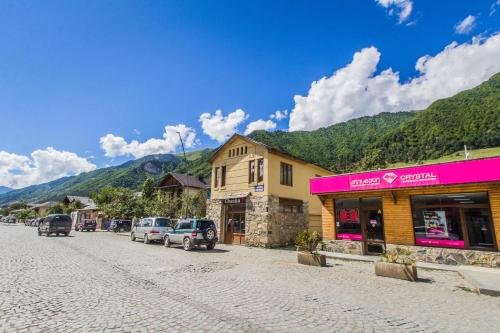
Mestia: the all-round base for Svaneti
Mestia sits at 1,500 metres in the Enguri valley and is the only Svan village with a full spread of guesthouses, gear shops and a small airport (Queen Tamar Airport, 2 km from the centre). From here the walk to the Chalaadi Glacier takes about three hours return, while the tougher Mestia–Ushguli route is a four-day trek. Late June to early October is the window; July and August bring the most walkers. Book a guesthouse in the Lanchvali or Seti neighbourhoods, a 10–15 minute walk from the main square, to avoid minibus noise.
Rates for a double room with breakfast generally fall between 80 and 150 lari per night in summer, and many guesthouses will pack a lunch for 15–20 lari. The Svaneti Museum of History and Ethnography, near the town centre, is a worthwhile rainy-day stop. I would skip the cable car to Hatsvali unless you are skiing — the walking from the top station is short and exposed. For walkers who want one base for a week, Mestia is the obvious choice.
Ushguli: high, remote and worth two nights
Ushguli is a cluster of four hamlets at around 2,100 metres, roughly 45 km and a two-and-a-half-hour drive from Mestia on a rough track. The road is passable without four-wheel drive in dry weather, but most visitors take a shared minibus or hire a driver. The classic day walk from Ushguli to the Shkhara Glacier viewpoint takes four to five hours return. Guesthouses are simpler than in Mestia, often with shared bathrooms, and summer rates run from 60 to 100 lari per person including dinner and breakfast.
Because the altitude is higher, snow can linger into May and return in October. The best months are July and August, when the tracks are dry and the days long. I would book two nights here rather than one: the drive eats a half-day each way, and the light on the towers at Lamaria church is best in the evening. Bring cash — there is no ATM in Ushguli — and expect patchy mobile signal. This is not a place to base yourself for a week; it is a place to slow down for two days.
Khevsureti: Shatili and Mutso for fortress walks
Shatili, a fortified village of stone towers on the Argun river, is about a three-hour drive (100 km) from Tbilisi via the Georgian Military Highway and the Datvisjvari pass. The pass is usually open from late May to October; check locally before setting out. The walk from Shatili to the ruined fortress of Mutso is about 10 km each way, following the river, and takes five to six hours return. Guesthouses in Shatili are family-run and basic, with doubles from around 70 lari including meals.
This is the base for walkers who want solitude and are prepared for rough roads. There is no public transport to Shatili, so you will need a hired driver or a tour. June and September are the sweet spots: wildflowers in June, clear light in September, fewer people in both. I would not attempt the Mutso walk in July midday heat without an early start. Skip Khevsureti entirely if you have less than three days — the drive alone justifies a longer stay.
Tusheti: the sheep-track season
Tusheti opens only from late June to early September, when the Abano pass (2,850 m) is clear. The drive from Telavi to Omalo takes four to five hours in a high-clearance vehicle. From Omalo, the walk to Dartlo along the Pirikiti Alazani valley is about 12 km and takes four to five hours one way; many walkers stay overnight in Dartlo or Girevi. Guesthouses in Omalo charge roughly 70–100 lari per person with dinner and breakfast.
Because the season is short, book ahead for July and August, especially in Omalo and Dartlo. The villages are small and beds are limited. I would base myself in Omalo for three nights and take day walks to Diklo and Shenako rather than trying to move every night. Note that there is no fuel station beyond Telavi and no ATM in Tusheti. The scenery is exceptional, but this is not a place for casual strolling — the tracks are steep and the weather changes fast.