Related articles
The Route: Tbilisi to Bakuriani via Borjomi
Bakuriani sits at around 1,700 metres on the northern slope of the Trialeti range, and the railway that reaches it is the reason the village became a resort in the first place. The journey starts at Tbilisi's main station, passes through Borjomi — the spa town in the gorge below — and then climbs on a narrow-gauge line through conifer forest to Bakuriani station. Because the mountain section is a separate, slow service, most travellers cover Tbilisi to Borjomi on a comfortable intercity train in roughly four hours, then change for the final climb of about an hour.
Practical planning comes down to the change. Book a morning departure from Tbilisi so you are not making the mountain connection in the dark — winter daylight in Georgia fades before 18:00 in January. The Borjomi to Bakuriani segment is a short, spectacular stretch of railway with tight curves and viaducts, and it is worth treating as the centrepiece rather than an afterthought. If you are carrying skis or a board, check baggage handling at the station rather than assuming it will be simple on the small train. I would build the day around the mountain leg, not the capital end.
What Winter in Bakuriani Is Actually Like
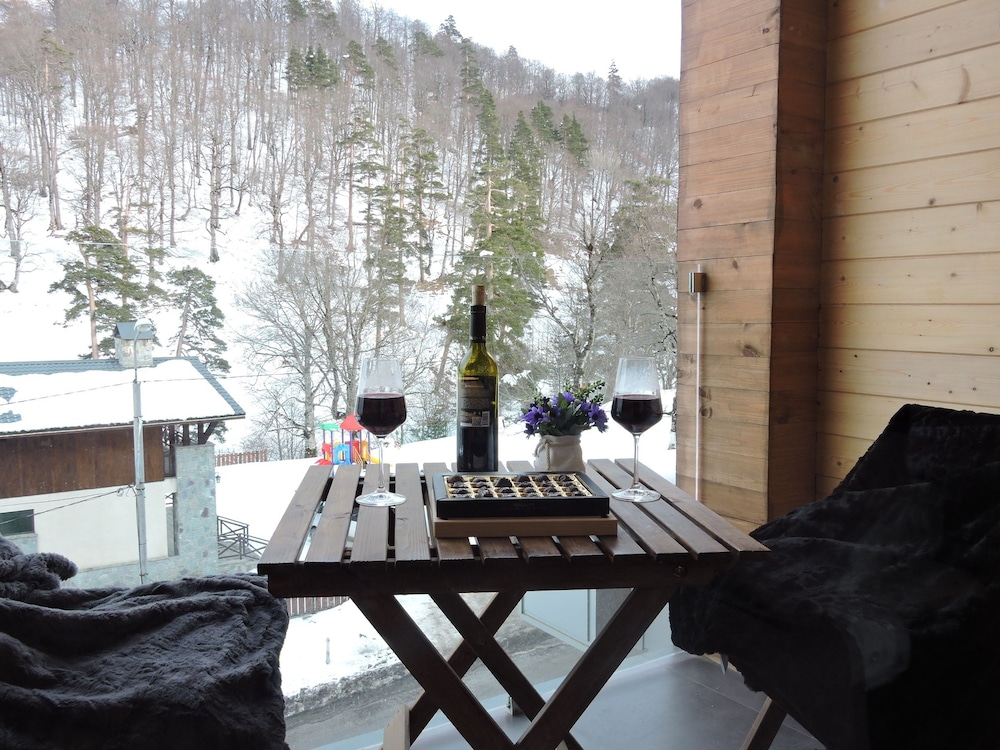
Bakuriani is not a purpose-built alpine village. It is a sprawl of guesthouses, Soviet-era sanatoria and newer apartment blocks spread across a plateau and connected by a road that runs from the lower village up to the ski areas at Kokhta and Didveli. The two ski hills are short drives or a long walk apart, and the resort runs shuttle buses in season. Snow cover is usually reliable from late December through March, with February typically the deepest. Terrain suits beginners and intermediates far better than experts — Kokhta has gentle, wide runs that are good for first-timers, while Didveli is slightly steeper.
Off the slopes, the appeal is quieter: forest walks on marked trails, the little Botanical Garden, and the faded charm of the old sanatorium buildings. Bakuriani has no real town centre or café culture in the way Tbilisi does, so a day trip is genuinely feasible — you see the mountains, ride the lifts, and come back. What you should skip is trying to squeeze in both ski hills in one day. Pick Kokhta if you are learning, Didveli if you already ski. If you want a base for two or three nights, Bakuriani works; for a single day, treat it as a taster.
Timing the Return and Where to Stay
The return is where day-trippers get caught out. You need to be back at Bakuriani station with margin before the afternoon mountain train, and then connect at Borjomi for Tbilisi. In practice this gives you maybe four or five hours on the ground — enough for one ski area and lunch, not enough for a leisurely mountain day. Check the current timetable on the day you travel, since winter schedules on the narrow-gauge line are limited and do not always align neatly with the mainline service. A missed connection in Borjomi means a long wait or a marshal-arranged taxi, which is expensive over that distance.
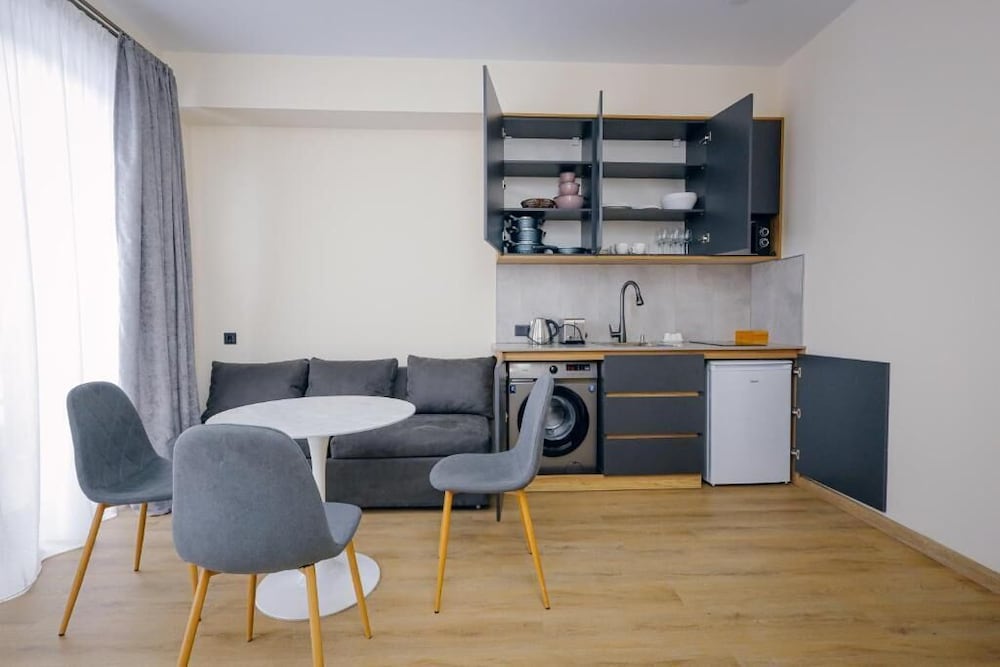
If that sounds tight, staying a night changes everything. Bakuriani has a good spread of guesthouses and small hotels in the 3-4 star range, concentrated along the road between the lower village and Didveli. Book somewhere within walking distance of a shuttle stop rather than high on the hill unless the property explicitly offers transfers — snow and luggage do not mix well on steep unlit lanes. Borjomi itself is a pleasant alternative base, lower and milder, with the famous mineral water park and a walkable centre. For a ski-focused trip I would book in Bakuriani; for a mixed culture-and-mountains trip, Borjomi.
Note that the train is not the only option. Marshrutkas and shared taxis run from Tbilisi's Didube station to Bakuriani in around three hours in good conditions, longer in snow, and give you far more flexibility on the return. The train is slower and less predictable but enormously more scenic and comfortable in winter weather. Many travellers take the train out and a shared taxi back — a sensible compromise.
Making the Booking Work for You
Winter weekends in Bakuriani fill up with Tbilisi families, so book accommodation at least a week ahead for Friday and Saturday nights, and further ahead around Georgian public holidays in January. Midweek is noticeably quieter and cheaper, and the lifts are less crowded. Rooms in guesthouses are the most common choice and usually include breakfast; larger hotels cluster near Didveli. When booking, ask directly about heating and hot water reliability — this is the single most common winter complaint in the resort, and a straight answer tells you a lot about the property.
Pack for real cold: Bakuriani is significantly higher and colder than Tbilisi, and the plateau catches wind. Waterproof boots matter more than a fashionable coat because the village roads turn to slush. Bring cash for lift passes and small guesthouses, and carry your passport for the ticket office. The trip rewards a little patience with timetables — the mountain railway is slow, but it is also the most memorable few hours of many Georgia itineraries. Plan the day around it and you will not regret the detour.