Where to stay
Hotels in Akhaltsikhe
Vardzia: sleeping in Akhaltsikhe, not at the cave door
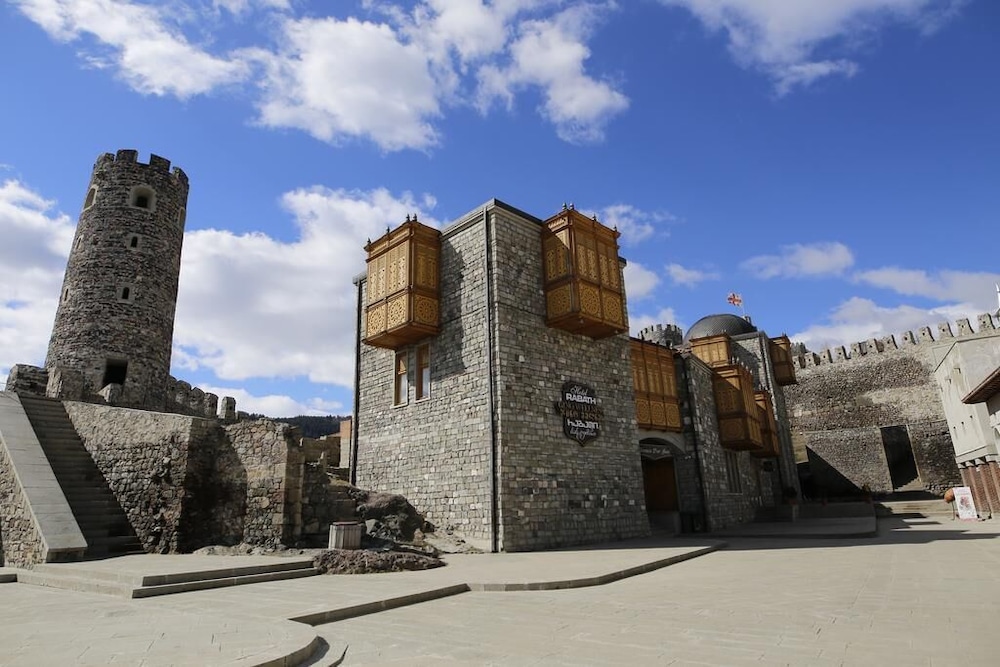
The cave monastery of Vardzia sits in a gorge in the Samtskhe-Javakheti region, about 30km south of Akhaltsikhe along a road that follows the Mtkvari river. Almost every hotel worth booking is in Akhaltsikhe itself, where the restored Rabati fortress anchors the old quarter and rooms cluster on and around Kostava Street. Expect a wide choice from modest family guesthouses to small three-star hotels; the town is the region's administrative centre and the only place with a steady supply of hot water and reliable winter heating.
I would book in Akhaltsikhe for two nights rather than attempting Vardzia as a day trip from Tbilisi. The drive is around three and a half hours each way, and the last stretch past Aspindza is slow. From Akhaltsikhe, Vardzia is under an hour, and you can be at the caves when the gates open at 10am, before the tour buses arrive from Borjomi. Late May to early October is the sensible window; the road past Aspindza can be icy from December to March.
If you have a third day, use it for Khertvisi fortress, 20 minutes south of Akhaltsikhe, and the Vanis Kvabebi cave complex a few kilometres from Vardzia, which sees a fraction of the visitors. Both are free or nominal to enter, and neither needs a guide.
Uplistsikhe: Gori as the practical base
Uplistsikhe, the pagan rock-cut town above the Mtkvari, lies 10km east of Gori, and Gori is where you should sleep. The town has a modest but growing set of hotels, mostly on and around Chavchavadze Avenue and near the Stalin Museum, and prices sit comfortably below Tbilisi levels for comparable rooms. From Gori, the site is a 15-minute taxi ride on the Kvemo Chala road; agree a return fare with the driver, since taxis do not wait at the car park.
The train from Tbilisi's Station Square takes about an hour and a quarter, and marshrutkas from Didube run frequently and cost very little. I would allow two to three hours at Uplistsikhe: the paths are uneven, there is little shade, and the amphitheatre and the hall of Queen Tamar reward a slow look. April to June and September to October are the best months; July and August are punishing on the exposed rock with no cover.
Skip the organised day tours from Tbilisi if you can. They tend to pair Uplistsikhe with the Stalin Museum in a tight half-day, which gives you about 45 minutes at the caves. Staying overnight in Gori lets you go early, and you can add the Ateni Sioni church and the Gorijvari viewpoint without rushing.
David Gareja: Signagi versus Udabno
The David Gareja monastery complex, with its painted refectory and cells cut into the bald hillside, sits on the Kakheti side of the border ridge, roughly 70km southeast of Tbilisi. The nearest real base is Udabno, a small village a few kilometres from the site with a handful of guesthouses, or Signagi, the wine town 35km to the northeast with a far wider choice of hotels. Tbilisi works too, at about two hours' drive each way on the Sagarejo road.
I would book Signagi if you want comfort, restaurants and a walkable old town behind the defensive wall, and Udabno only if your priority is being at the monastery at sunrise. The access road to the complex is unsurfaced for the last stretch and can be rough after rain; check locally before setting out in a low car. Spring and autumn are best, and the site is quieter on weekday mornings.
Be aware that the ridge above the monastery marks the border with Azerbaijan, and the further cave fields are sometimes closed. Ask in Udabno or check with the visitor centre in Signagi before planning a long walk. Do not attempt the walk without water and sun cover: there is no shade and no facilities beyond the monastery gate.
Booking strategy across the three bases
Combine two of the three rather than all of them on a short trip. Akhaltsikhe pairs naturally with Borjomi and Bakuriani for a three-night southern loop; Gori sits on the main east-west highway and works as a stop between Tbilisi and Kutaisi; Signagi anchors a Kakheti wine itinerary with Telavi 60km away. Distances are short by Georgian standards but roads are slow, so plan one base per two nights rather than a new hotel every day.
On this site, searches for Akhaltsikhe and Signagi are the strongest of the three, and availability in both thins out in July and August, so book those two first. Gori has more slack. For all three, confirm that the room has air conditioning in summer and a working heater in winter; many smaller guesthouses advertise both and deliver one. Late September is the sweet spot: warm days, fewer visitors at the caves, and the grape harvest in Kakheti.
Which base suits which traveller
Families and travellers without a car should favour Gori, where the train and marshrutka connections are easiest and the caves are a short taxi away. Wine-focused visitors should choose Signagi and treat David Gareja as a morning excursion. Travellers heading for the Armenian border at Bavra or exploring Samtskhe-Javakheti should make Akhaltsikhe their base, and use it for Vardzia, Khertvisi and the Abastumani observatory road.
What to skip
Skip staying in the villages immediately beside Vardzia and Uplistsikhe. The handful of guesthouses there offer atmosphere but little choice, thin winter heating and no restaurants within walking distance, and you will end up driving back to town for dinner. Skip the midday visit to Uplistsikhe in July and August. Skip any itinerary that tries to see Vardzia and David Gareja on consecutive days: they sit at opposite ends of the country, with five to six hours of driving between them.